

Discover the Kitchen Tool Everyone Is Raving About!
- • Precision Engineered: Sharp blade with durable craftsmanship.
- • Comfort First: Ergonomic design for effortless slicing.
- • Stylish & Strong: Elegant wood handle meets stainless steel strength.
- • Risk-Free Pick: Thousands of happy home chefs can’t be wrong.
- • Today’s Deal: Just $29.95 instead of $99.85 — limited-time offer!
This post may include affiliate links — learn more here .
Introduction
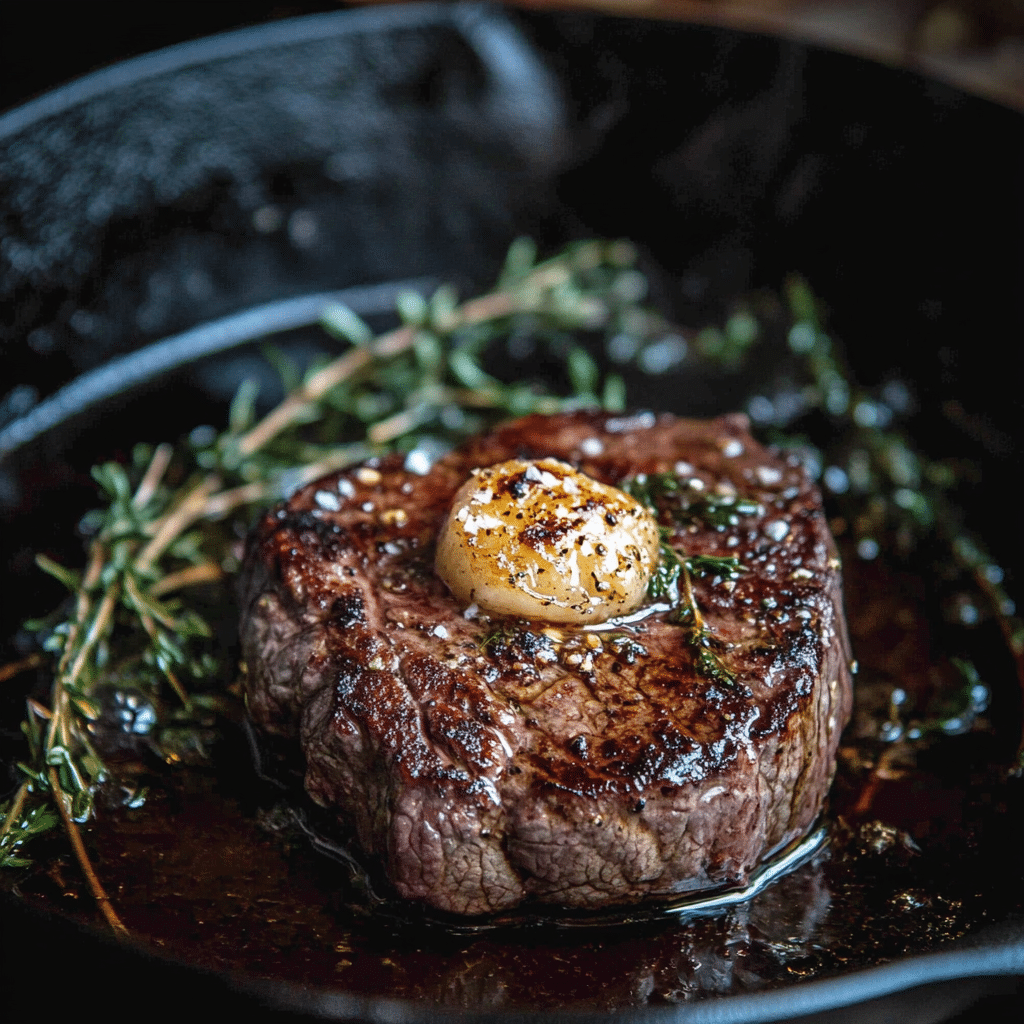
If you’re a steak lover, then there’s no cut quite as tender and luxurious as filet mignon. Known for its melt-in-your-mouth texture and delicate flavor, filet mignon is often considered the pinnacle of beef cuts. While it’s frequently reserved for fine dining restaurants, it’s surprisingly easy to cook at home—especially when you use a trusty cast iron pan.
Cooking filet mignon in a cast iron pan ensures a perfect sear, locking in the juices for an incredibly tender steak. Whether you’re preparing it for a special occasion, a cozy dinner at home, or simply because you’re craving a delicious steak, this method is sure to elevate your meal to gourmet levels.
In this article, we’ll explore why cooking filet mignon in a cast iron pan is a foolproof method, provide step-by-step instructions, and share helpful tips to ensure your steak turns out perfectly every time. Plus, we’ll keep it halal by avoiding any pork, bacon, or wine in the recipe. Get ready to impress your guests or treat yourself to an exceptional steak dinner.
Why You’ll Love This Recipe
- Perfectly Seared Crust: The cast iron pan creates an even, high heat that sears the filet mignon to perfection, producing a delicious, golden-brown crust while keeping the inside juicy and tender.
- Simple Ingredients: You don’t need complicated seasonings to make a great filet mignon. Just a few key ingredients, like salt, pepper, and butter, are all you need to enhance the natural flavor of the beef.
- No Need for a Grill: You don’t need an outdoor grill to cook a steak like a pro. A cast iron pan allows you to achieve that perfect sear, whether you’re cooking indoors or outdoors.
- Quick and Easy: With just a few minutes of preparation and cooking time, you can have a steakhouse-quality filet mignon right in your own kitchen.
- Halal-Friendly: This recipe ensures that you’re making a delicious, halal meal, without using pork, bacon, or any alcohol-based ingredients.
Preparation Time and Servings
- Total Time: 20 minutes (5 minutes for prep, 15 minutes for cooking)
- Servings: This recipe makes 2 servings, but you can easily adjust the number of steaks to suit your needs.
- Nutrition Facts (per serving): Calories: 350, Protein: 30g, Carbs: 0g, Fat: 24g
Ingredients
- 2 Filet Mignon Steaks (6-8 oz each): Make sure to choose high-quality, well-marbled steaks for the best flavor and tenderness.
- 2 tablespoons olive oil: For searing the steak and adding richness.
- 1 tablespoon unsalted butter: Adds flavor and richness to the steak.
- 2-3 garlic cloves, smashed: Infuses the butter with a delicious aroma.
- Fresh thyme sprigs (or rosemary): These herbs enhance the flavor of the steak and make it aromatic.
- Kosher salt and freshly ground black pepper: For seasoning the steak and enhancing its natural flavors.
Step-by-Step
 Preparation
FIRST STEP: PREPARE THE FILET MIGNON
- Remove the Steaks from the Fridge: Take the filet mignon steaks out of the refrigerator and let them come to room temperature for about 15 minutes before cooking. This helps them cook more evenly.
- Pat the Steaks Dry: Use paper towels to pat the steaks dry. Removing excess moisture ensures a better sear when you cook them.
- Season the Steaks: Generously season both sides of the filet mignon with kosher salt and freshly ground black pepper. The seasoning enhances the beef’s natural flavors and helps create a delicious crust.
SECOND STEP: HEAT THE CAST IRON PAN
- Preheat the Pan: Place your cast iron pan on the stove over medium-high heat. Let the pan heat up for about 5 minutes until it’s very hot. The pan needs to be preheated to ensure a perfect sear.
- Add Olive Oil: Pour the olive oil into the hot cast iron pan, swirling it around to coat the bottom evenly. The oil should shimmer but not smoke. If it starts to smoke, lower the heat slightly.
THIRD STEP: SEAR THE FILET MIGNON
- Add the Steaks to the Pan: Carefully place the filet mignon steaks in the pan, making sure not to overcrowd them. You should hear a sizzling sound when they hit the pan—this means the steaks are searing properly.
- Cook the First Side: Let the steaks cook undisturbed for about 4-5 minutes, allowing them to develop a rich, golden-brown crust. Avoid moving the steaks around too much, as this can prevent them from forming a good sear.
- Flip the Steaks: Using tongs, flip the steaks over to the other side. The first side should be nicely browned, and the second side will also cook to a similar golden color.
FOURTH STEP: ADD BUTTER AND HERBS
- Add Butter, Garlic, and Herbs: Once you’ve flipped the steaks, add the butter, smashed garlic cloves, and fresh thyme (or rosemary) sprigs to the pan.
- Baste the Steaks: Tilt the pan slightly so that the melted butter pools in one corner. Use a spoon to baste the steaks with the hot butter. This infuses the steaks with flavor and helps keep them moist while cooking.
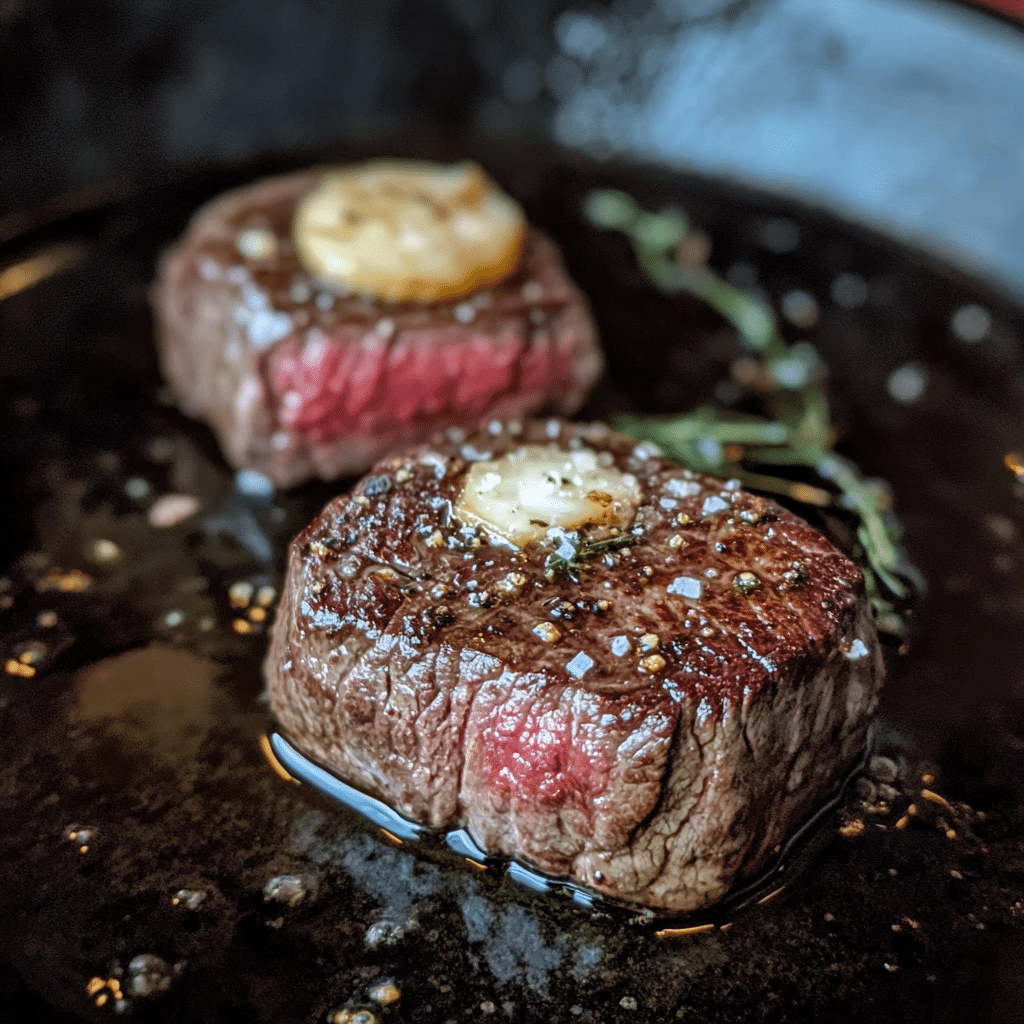
- Cook to Desired Doneness: For a medium-rare steak, cook for another 4-5 minutes, or until the internal temperature reaches 130-135°F (54-57°C). For medium, aim for 140-145°F (60-63°C). Use a meat thermometer to ensure the steak is cooked to your desired level of doneness.
FIFTH STEP: REST THE STEAKS
- Remove the Steaks from the Pan: Once the steaks have reached your desired doneness, remove them from the pan and place them on a plate or cutting board.
- Let the Steaks Rest: Allow the filet mignon to rest for 5-10 minutes before slicing into it. Resting helps the juices redistribute throughout the meat, ensuring a tender and juicy steak.
FINAL STEP: SERVE AND ENJOY
- Slice and Serve: After the steaks have rested, slice them against the grain to ensure maximum tenderness. Serve immediately with your favorite sides, such as mashed potatoes, roasted vegetables, or a fresh salad.
- Garnish: You can also garnish the steaks with fresh herbs or a sprinkle of flaky sea salt for an extra touch of flavor.
How to Serve Filet Mignon
Filet mignon is an elegant and versatile dish that can be served in many ways. Here are some great serving ideas:
1. Serve with Classic Sides
A filet mignon is a star on its own, but pairing it with classic sides can elevate the meal. Consider serving it with creamy mashed potatoes, sautéed spinach, or a side of roasted vegetables like asparagus or carrots.
2. Pair with a Fresh Salad
To balance the richness of the steak, serve it alongside a crisp, refreshing salad. A simple arugula or mixed greens salad with a light vinaigrette adds a fresh contrast to the meal.
3. Complement with Grilled Vegetables
Grilled vegetables, such as bell peppers, zucchini, or mushrooms, pair wonderfully with filet mignon. The smoky flavor from grilling complements the steak’s tenderness, creating a harmonious dish.
4. Serve with Rice or Couscous
If you’re looking for something hearty to pair with your filet mignon, consider serving it with a side of rice or couscous. A simple pilaf or seasoned couscous will add flavor and texture to the meal.
Additional Tips
- Use a Meat Thermometer: A meat thermometer is your best friend when cooking steak. It helps you cook the filet mignon to your preferred level of doneness and prevents overcooking.
- Don’t Overcrowd the Pan: If you’re cooking more than two steaks, cook them in batches. Overcrowding the pan will reduce the heat and prevent the steaks from getting a proper sear.
- Resting Is Crucial: Allow the steaks to rest after cooking. This step ensures the steak remains juicy and tender.
- For Extra Flavor: If you want to add a bit more flavor, drizzle a homemade sauce over the steak, such as a simple garlic butter or chimichurri.
Recipe Variations
While the classic version of cooking filet mignon in a cast iron pan is delicious on its own, here are some variations to experiment with:
1. Garlic Herb Butter
For extra richness, mix softened butter with minced garlic, parsley, and lemon zest. Add a dollop of this garlic herb butter on top of the steak just before serving for an extra layer of flavor.
2. Spicy Rub
If you enjoy a bit of heat, try adding a spicy rub to the filet mignon before cooking. A combination of paprika, cayenne, and black pepper will give your steak a smoky, spicy kick.
3. Grilled Filet Mignon
If you prefer grilling to pan-searing, filet mignon can also be cooked on a grill. Simply season the steaks and grill them over high heat for 4-5 minutes per side.
Freezing and Storage
Filet mignon is best enjoyed fresh, but if you have leftovers, here’s how to store and reheat them:
Refrigeration:
Store leftover filet mignon in an airtight container in the fridge for up to 3 days. To reheat, place the steak in a preheated oven at 250°F (120°C) for 10-15 minutes until warmed through.
Freezing:
If you want to freeze cooked filet mignon, wrap the steak tightly in plastic wrap and aluminum foil. It can be stored in the freezer for up to 3 months. Thaw overnight in the fridge before reheating.
Special Equipment
To make your filet mignon experience even better, the following kitchen tools are recommended:
- Cast Iron Skillet: A heavy-duty, pre-seasoned cast iron skillet is ideal for searing steaks. The even heat distribution ensures perfect browning and a crispy crust.
- Meat Thermometer: This tool helps ensure your steak is cooked to your desired doneness.
- Tongs: Use tongs for flipping the steaks without piercing them and losing juices.
- Basting Spoon: A spoon is useful for basting the steaks with melted butter and herbs during the cooking process.
- Resting Rack or Plate: A resting rack or plate allows the juices to settle back into the steak without pooling at the bottom.
Frequently Asked Questions (FAQ)
1. Can I use a different pan instead of cast iron?
While other pans like stainless steel can also work, cast iron is the best choice for achieving an even sear and retaining heat. The heat retention of cast iron makes it perfect for cooking thick cuts of steak like filet mignon.
2. Can I cook filet mignon in the oven instead of on the stove?
Yes, you can cook filet mignon in the oven after searing it in the cast iron pan. After searing both sides, transfer the skillet to a preheated oven at 400°F (200°C) for about 5-10 minutes, depending on the level of doneness you prefer.
3. Can I make filet mignon without butter?
Yes, if you prefer a lighter option, you can skip the butter and use oil for cooking. However, butter adds richness and flavor that enhances the steak’s taste.
4. How do I store leftover filet mignon?
Store leftover filet mignon in an airtight container in the refrigerator for up to 3 days. Reheat it gently on low heat to prevent it from becoming tough.
5. Can I freeze cooked filet mignon?
While it’s not ideal to freeze cooked filet mignon, it is possible. Allow the steak to cool to room temperature, wrap it tightly in plastic wrap, and then foil. Store it in the freezer for up to 2 months. To reheat, thaw in the refrigerator overnight and warm in a low oven or on the stovetop.
Print
Cooking Filet Mignon in a Cast Iron Pan
- Total Time: 40minutes
Ingredients
- 2 Filet Mignon steaks (6–8 oz each): Look for steaks that are thick (at least 1.5 inches) and have a nice marbling of fat for the best texture and flavor.
- 2 tablespoons olive oil or vegetable oil: For searing the steak in the pan.
- 1 tablespoon unsalted butter: Adds richness and flavor while finishing the steak.
- 2 cloves garlic (crushed): For infusing flavor into the butter.
- 2 sprigs fresh rosemary or thyme: Fresh herbs add a fragrant aroma to the steak.
- Salt and freshly cracked black pepper: Essential for seasoning the steak to perfection.
- Optional: Additional seasonings like paprika, garlic powder, or onion powder can be used for extra flavor.
Instructions
FIRST STEP: PREPARE THE FILET MIGNON
- Bring Steaks to Room Temperature: Take the filet mignon steaks out of the refrigerator at least 30 minutes before cooking. This allows the meat to cook more evenly by ensuring that the center isn’t too cold when it hits the pan.
- Season the Steaks: Pat the steaks dry with paper towels to remove any moisture (this will help with searing). Season generously with salt and pepper on both sides. You can also sprinkle on additional spices if desired, such as garlic powder, paprika, or onion powder.
SECOND STEP: HEAT THE CAST IRON PAN
- Preheat the Pan: Place your cast iron skillet on the stove and heat it over medium-high heat for about 5-7 minutes. A properly heated pan is essential for a good sear. The pan should be hot enough that when you add oil, it shimmers but doesn’t smoke excessively.
- Add Oil: Once the pan is hot, add the olive oil (or vegetable oil) to the pan. Let it heat up until it starts to shimmer, ensuring it coats the bottom of the pan.
THIRD STEP: SEAR THE FILET MIGNON
- Sear the Steaks: Carefully place the filet mignon steaks into the hot pan. You should hear a satisfying sizzle. Let the steaks sear without moving them for about 3-4 minutes to create a golden-brown crust.
- Flip the Steaks: Once the first side has developed a beautiful sear, use tongs to flip the steaks over. Sear the second side for another 3-4 minutes, depending on your desired level of doneness.
FOURTH STEP: ADD BUTTER AND HERBS
- Add Butter and Garlic: When you flip the steaks, add the butter, crushed garlic cloves, and fresh rosemary or thyme to the pan. Allow the butter to melt and combine with the oil. Use a spoon to baste the steaks with the melted butter and herbs for added flavor.
- Finish Cooking: After the steaks are seared on both sides, you can continue cooking them in the pan for an additional 2-4 minutes, depending on your desired doneness. For rare steaks, cook for about 4-5 minutes total; for medium-rare, about 5-6 minutes; for medium, about 6-7 minutes; for well-done, 8-9 minutes.
FIFTH STEP: REST THE STEAK
- Rest the Steaks: Remove the steaks from the pan and place them on a plate. Tent them loosely with aluminum foil and let them rest for about 5 minutes. Resting the steaks allows the juices to redistribute and ensures a tender, juicy result.
FINAL STEP: SERVE AND ENJOY
- Serve: After resting, your filet mignon is ready to be served. Pair it with your favorite side dishes like mashed potatoes, grilled vegetables, or a fresh salad for a complete meal. Drizzle some of the leftover pan juices over the steak for extra flavor.
Nutrition
- Serving Size: 2
- Calories: 450
- Fat: 30g
- Carbohydrates: 0g
- Protein: 45g
Conclusion
Cooking filet mignon in a cast iron pan is a simple and foolproof way to create a restaurant-quality steak at home. The combination of a hot, preheated pan, a bit of butter, and a few key seasonings ensures that the steak comes out perfectly seared on the outside while remaining tender and juicy on the inside. This method guarantees a delicious, halal meal that will impress your guests or provide a satisfying dinner for yourself. Don’t forget to pair your filet mignon with some tasty sides and enjoy a delicious meal that’s both luxurious and easy to prepare. Happy cooking!