

Discover the Kitchen Tool Everyone Is Raving About!
- • Precision Engineered: Sharp blade with durable craftsmanship.
- • Comfort First: Ergonomic design for effortless slicing.
- • Stylish & Strong: Elegant wood handle meets stainless steel strength.
- • Risk-Free Pick: Thousands of happy home chefs can’t be wrong.
- • Today’s Deal: Just $29.95 instead of $99.85 — limited-time offer!
This post may include affiliate links — learn more here .
Introduction
Scrambled eggs are a breakfast staple that most of us know and love, but have you ever thought about adding a little extra flavor and zest to them? Enter Kimchi Scrambled Eggs—a vibrant, flavorful twist on the classic dish that combines the creamy richness of scrambled eggs with the spicy, tangy, and umami-packed flavors of kimchi. Kimchi, a staple in Korean cuisine, is a fermented dish typically made from vegetables, usually napa cabbage, and seasoned with chili peppers, garlic, and ginger. When paired with scrambled eggs, it creates a balance of textures and flavors that will excite your taste buds.
Kimchi Scrambled Eggs are easy to make, versatile, and perfect for a satisfying breakfast or brunch. This dish is not only bursting with flavor but is also packed with probiotics, making it a healthier alternative to the traditional scrambled eggs. Whether you’re a fan of kimchi or looking for a new way to enjoy your eggs, this dish will quickly become a favorite in your breakfast rotation.
In this article, we’ll explore the reasons why Kimchi Scrambled Eggs are a must-try, guide you step-by-step through the preparation, and share helpful tips and variations to personalize this dish. Whether you’re looking to spice up your mornings or impress your guests with a unique breakfast offering, Kimchi Scrambled Eggs are the way to go!
Why You’ll Love This Recipe
- Flavor Explosion: Kimchi adds a spicy, tangy, and umami depth to your scrambled eggs that will take them to the next level. It’s a delicious fusion of comfort and bold, exotic flavors.
- Quick and Easy: This recipe is simple and can be prepared in just 10-15 minutes, making it the perfect choice for busy mornings or when you’re craving something flavorful in a hurry.
- Probiotic Benefits: Kimchi is packed with probiotics that support gut health, so you can enjoy a tasty breakfast that’s good for your digestive system.
- Customizable: Whether you prefer mild or spicy, you can adjust the amount of kimchi or add different seasonings to tailor the dish to your preferences.
- Halal-Friendly: This recipe is fully halal, as it doesn’t contain any pork, bacon, or wine. It’s suitable for those who follow a halal diet.
Preparation Time and Servings
- Total Time: 15 minutes
- Servings: This recipe serves 2 people, but it can easily be doubled or halved to accommodate your needs.
- Nutrition Facts (per serving):
- Calories: 250
- Protein: 12g
- Carbs: 15g
- Fat: 18g
- Fiber: 2g
Ingredients
For the Scrambled Eggs:
- 4 large eggs: The base of the dish, providing a creamy and fluffy texture.
- 2 tablespoons butter or olive oil: For cooking the eggs, adding richness and flavor.
- 1 tablespoon milk or cream (optional): This adds extra creaminess to the eggs, but you can skip it for a firmer texture.
- Salt and black pepper: To taste, for seasoning the eggs.
- 2 tablespoons green onions (optional): Chopped for garnish and an extra fresh flavor boost.
For the Kimchi:
- ½ cup kimchi: This fermented Korean side dish provides the signature tang, spice, and umami that makes this recipe so unique. Make sure to use halal-certified kimchi, as some varieties may contain non-halal ingredients like fish sauce.
- 1 teaspoon sesame oil: Adds a nutty flavor that pairs beautifully with kimchi.
- 1 tablespoon gochujang (optional): This Korean chili paste adds extra spice and flavor to the dish if you like a more intense kick. You can adjust the amount based on your spice tolerance.
Optional Garnishes:
- Chopped cilantro or parsley: For freshness and color.
- A sprinkle of sesame seeds: Adds a light crunch and nutty flavor to the dish.
- A drizzle of sriracha or hot sauce: For an additional spicy kick, if desired.
Step-by-Step
 Preparation
First Step: Prepare the Kimchi
- Chop the Kimchi: Start by chopping the kimchi into smaller, bite-sized pieces. This will make it easier to incorporate into the scrambled eggs. If you prefer a milder kimchi flavor, you can rinse the kimchi slightly under cold water to tone down its intensity.
- Sauté the Kimchi: Heat 1 teaspoon of sesame oil in a medium skillet over medium heat. Once the oil is hot, add the chopped kimchi to the pan. Sauté the kimchi for 2-3 minutes, stirring occasionally, until it’s warmed through and slightly caramelized. If you like a spicier dish, add 1 tablespoon of gochujang (Korean chili paste) to the kimchi while it’s cooking to infuse the dish with extra heat and depth of flavor.
Second Step: Prepare the Scrambled Eggs
- Whisk the Eggs: While the kimchi is cooking, crack the eggs into a bowl and whisk them together until the yolks and whites are fully combined. If you prefer creamier scrambled eggs, add 1 tablespoon of milk or cream to the eggs and whisk it in.
- Season the Eggs: Season the eggs with a pinch of salt and black pepper. Stir to combine.
- Cook the Eggs: In a separate pan, heat the butter or olive oil over medium-low heat. Once the pan is hot, pour in the beaten eggs. Allow the eggs to cook undisturbed for a few seconds before gently stirring with a spatula. Stir occasionally to create soft curds. Be careful not to overcook the eggs—they should be soft, creamy, and slightly runny.
- Combine the Kimchi and Eggs: Once the eggs are almost fully cooked (still slightly runny), add the sautéed kimchi to the eggs. Gently fold the kimchi into the eggs, allowing the flavors to combine. Continue cooking for another 1-2 minutes, until the eggs are fully cooked but still moist and creamy.
Final Step: Serve and Garnish
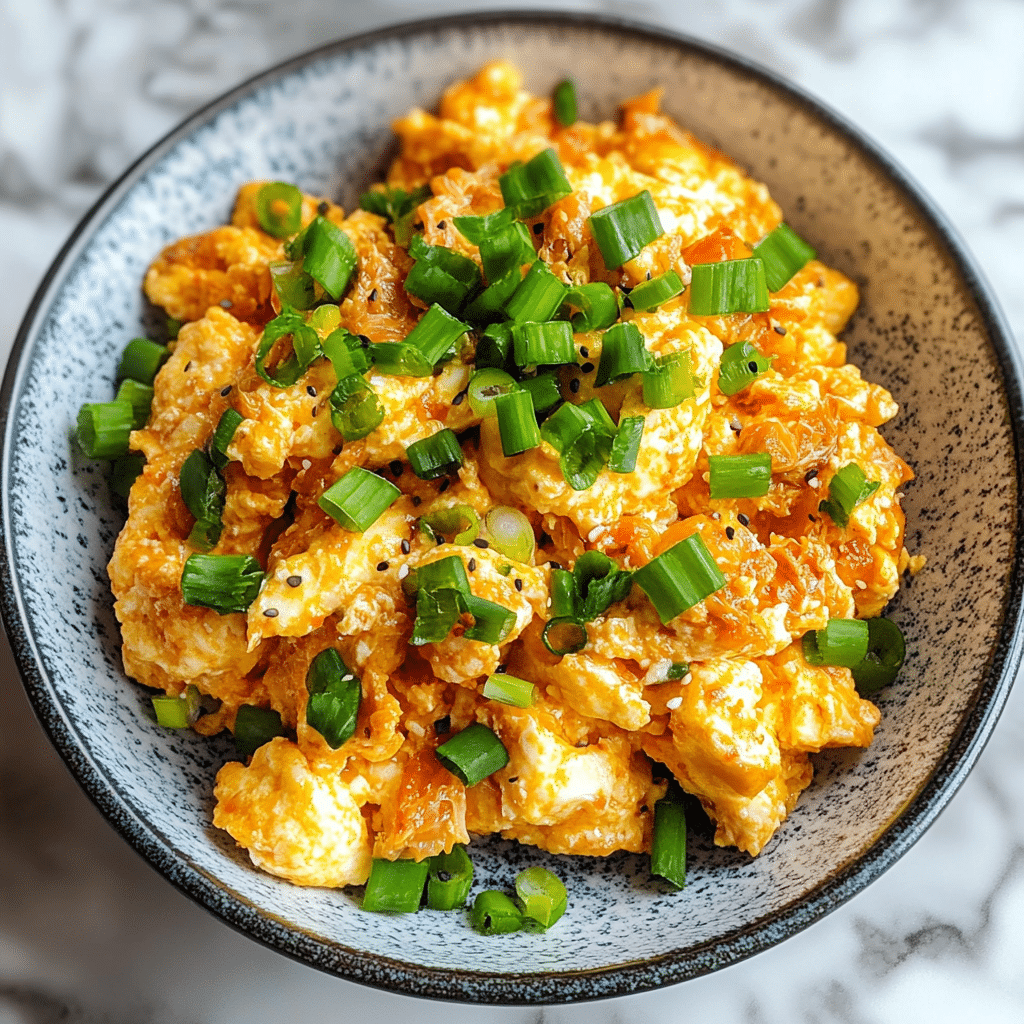
- Garnish the Dish: Transfer the Kimchi Scrambled Eggs to plates and garnish with chopped green onions, cilantro, or parsley. You can also sprinkle some sesame seeds on top for added texture and flavor.
- Serve: Serve the dish immediately while the eggs are warm. Kimchi Scrambled Eggs are perfect on their own, but they can also be enjoyed with a side of toasted bread, steamed rice, or even a fresh salad.
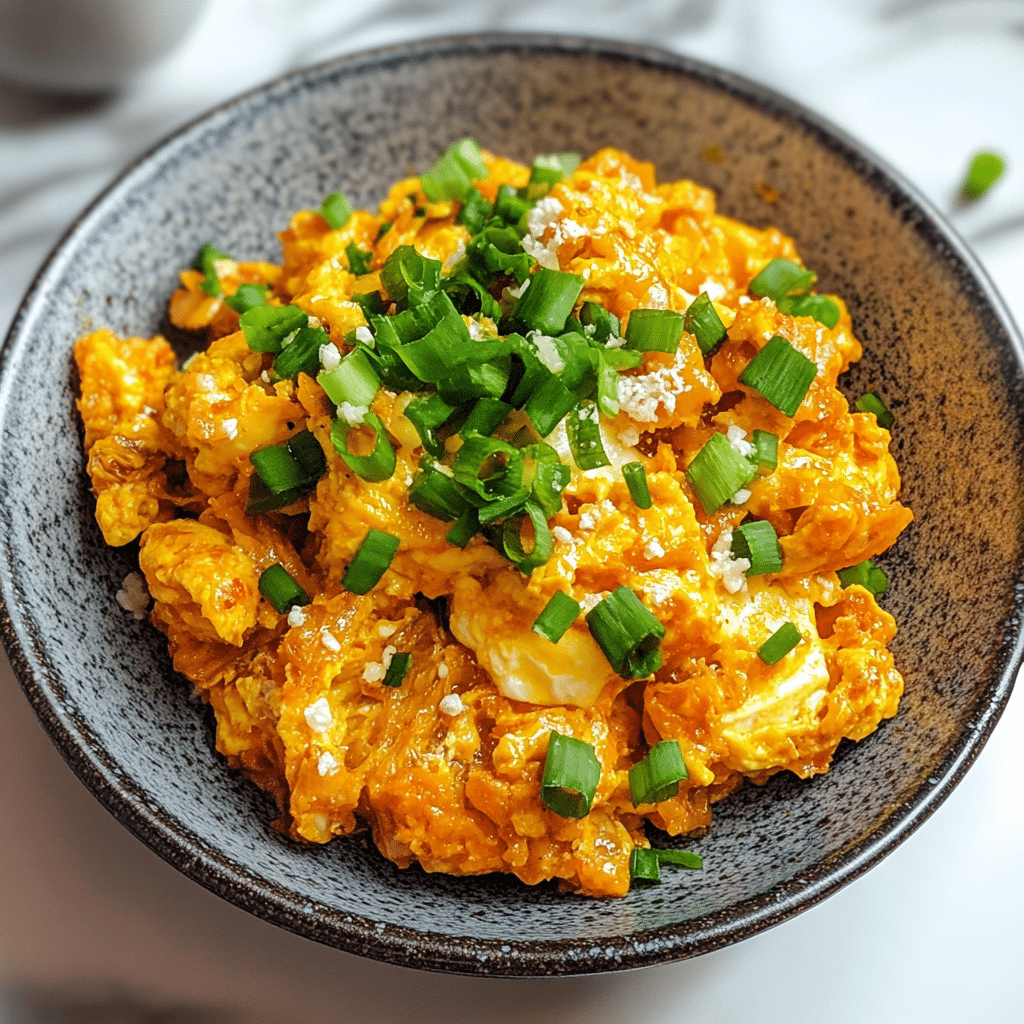
How to Serve Kimchi Scrambled Eggs
Kimchi Scrambled Eggs are incredibly versatile and can be enjoyed in a variety of ways. Here are some great ideas for serving this dish:
1. As a Stand-Alone Breakfast or Brunch
Kimchi Scrambled Eggs make a delicious and satisfying meal on their own. The combination of protein-rich eggs and probiotic-packed kimchi provides a hearty start to your day. For an extra indulgent breakfast, pair the eggs with some avocado slices or a dollop of sour cream.
2. Serve with Rice
For a more filling meal, serve Kimchi Scrambled Eggs over a bed of steamed rice. The richness of the eggs combined with the spicy kimchi complements the mildness of the rice, creating a balanced and satisfying dish. Add some pickled vegetables or a fried egg on top for extra flavor.
3. Wrap in a Tortilla
If you’re on the go, Kimchi Scrambled Eggs can be wrapped up in a tortilla for a delicious and easy breakfast burrito. Add a bit of cheese or some extra veggies for more texture and flavor.
4. Pair with a Side Salad
If you’re looking for a lighter meal, serve Kimchi Scrambled Eggs alongside a refreshing side salad with crunchy greens, cucumbers, and a sesame dressing. The tangy kimchi and the creamy eggs will pair beautifully with the fresh vegetables.
5. Enjoy with Toasted Bread
For a more traditional breakfast, serve Kimchi Scrambled Eggs with some toasted sourdough or whole wheat bread. The crispy bread is perfect for sopping up the creamy eggs and savory kimchi.
Additional Tips
- Adjust Spice Levels: If you prefer a milder version of this dish, you can reduce the amount of kimchi or omit the gochujang. Alternatively, if you love spice, increase the kimchi or add more gochujang for a fiery kick.
- Use Fresh Kimchi: While fermented kimchi is ideal for its depth of flavor, if you prefer a fresher taste, you can use newly made kimchi. It will still add a zesty element to the dish but with a less fermented taste.
- Make It Creamier: For extra creamy scrambled eggs, add a tablespoon of cream cheese or a dash of heavy cream while whisking the eggs. This will give the dish a rich, velvety texture.
Recipe Variations
While Kimchi Scrambled Eggs are delicious as they are, there are many ways to customize the recipe to suit your taste preferences.
1. Add Vegetables
For added nutrients and texture, consider adding vegetables such as spinach, mushrooms, bell peppers, or onions to the scrambled eggs. Sauté the veggies along with the kimchi to infuse them with flavor before combining them with the eggs.
2. Add Cheese
If you’re a fan of cheesy scrambled eggs, sprinkle some grated cheddar, mozzarella, or even a little cream cheese into the eggs while they cook. The creamy cheese pairs perfectly with the tangy kimchi.
3. Make It Vegan
To make Kimchi Scrambled Eggs vegan, simply substitute the eggs with tofu. Crumble the tofu and cook it with the kimchi and spices. The texture of tofu mimics scrambled eggs and will absorb all the flavors of the kimchi.
Freezing and Storage
Kimchi Scrambled Eggs are best enjoyed fresh, but if you have leftovers, you can store them in an airtight container in the fridge for up to 2 days. Reheat gently in a skillet over low heat to prevent overcooking the eggs.
While the eggs themselves don’t freeze well, the kimchi mixture can be stored in the freezer for up to 3 months. To use, thaw the kimchi and sauté it with fresh eggs when you’re ready to enjoy.
Special Equipment
While you don’t need any special equipment to make Kimchi Scrambled Eggs, having the following kitchen tools will make the process smoother:
- Skillet or Nonstick Pan: A good quality pan is essential for cooking the eggs and sautéing the kimchi.
- Whisk: For whisking the eggs and ensuring a smooth mixture.
- Spatula: To stir the eggs gently and fold in the kimchi.
Frequently Asked Questions
- Can I use a different type of kimchi? Yes, you can use any type of kimchi you like, but be sure to choose a halal-certified version if needed. Kimchi made from cabbage is the most common, but there are also varieties made from radish or cucumber.
- Can I make this recipe without sesame oil? While sesame oil adds a wonderful nutty flavor, you can substitute it with olive oil or vegetable oil if you don’t have it on hand.
- How can I make this dish spicier? To make the dish spicier, add more gochujang (Korean chili paste) or include additional fresh chili peppers when cooking the kimchi.
- Can I make this recipe ahead of time? Scrambled eggs are best served fresh, but you can prepare the kimchi and cook it ahead of time. Store the kimchi mixture in the fridge, then add it to scrambled eggs when you’re ready to eat.

Kimchi Scrambled Eggs
- Total Time: 15 minutes
Ingredients
For the Scrambled Eggs:
- 4 large eggs: The base of the dish, providing a creamy and fluffy texture.
- 2 tablespoons butter or olive oil: For cooking the eggs, adding richness and flavor.
- 1 tablespoon milk or cream (optional): This adds extra creaminess to the eggs, but you can skip it for a firmer texture.
- Salt and black pepper: To taste, for seasoning the eggs.
- 2 tablespoons green onions (optional): Chopped for garnish and an extra fresh flavor boost.
For the Kimchi:
- ½ cup kimchi: This fermented Korean side dish provides the signature tang, spice, and umami that makes this recipe so unique. Make sure to use halal-certified kimchi, as some varieties may contain non-halal ingredients like fish sauce.
- 1 teaspoon sesame oil: Adds a nutty flavor that pairs beautifully with kimchi.
- 1 tablespoon gochujang (optional): This Korean chili paste adds extra spice and flavor to the dish if you like a more intense kick. You can adjust the amount based on your spice tolerance.
Optional Garnishes:
- Chopped cilantro or parsley: For freshness and color.
- A sprinkle of sesame seeds: Adds a light crunch and nutty flavor to the dish.
- A drizzle of sriracha or hot sauce: For an additional spicy kick, if desired.
Instructions
First Step: Prepare the Kimchi
- Chop the Kimchi: Start by chopping the kimchi into smaller, bite-sized pieces. This will make it easier to incorporate into the scrambled eggs. If you prefer a milder kimchi flavor, you can rinse the kimchi slightly under cold water to tone down its intensity.
- Sauté the Kimchi: Heat 1 teaspoon of sesame oil in a medium skillet over medium heat. Once the oil is hot, add the chopped kimchi to the pan. Sauté the kimchi for 2-3 minutes, stirring occasionally, until it’s warmed through and slightly caramelized. If you like a spicier dish, add 1 tablespoon of gochujang (Korean chili paste) to the kimchi while it’s cooking to infuse the dish with extra heat and depth of flavor.
Second Step: Prepare the Scrambled Eggs
- Whisk the Eggs: While the kimchi is cooking, crack the eggs into a bowl and whisk them together until the yolks and whites are fully combined. If you prefer creamier scrambled eggs, add 1 tablespoon of milk or cream to the eggs and whisk it in.
- Season the Eggs: Season the eggs with a pinch of salt and black pepper. Stir to combine.
- Cook the Eggs: In a separate pan, heat the butter or olive oil over medium-low heat. Once the pan is hot, pour in the beaten eggs. Allow the eggs to cook undisturbed for a few seconds before gently stirring with a spatula. Stir occasionally to create soft curds. Be careful not to overcook the eggs—they should be soft, creamy, and slightly runny.
- Combine the Kimchi and Eggs: Once the eggs are almost fully cooked (still slightly runny), add the sautéed kimchi to the eggs. Gently fold the kimchi into the eggs, allowing the flavors to combine. Continue cooking for another 1-2 minutes, until the eggs are fully cooked but still moist and creamy.
Final Step: Serve and Garnish
- Garnish the Dish: Transfer the Kimchi Scrambled Eggs to plates and garnish with chopped green onions, cilantro, or parsley. You can also sprinkle some sesame seeds on top for added texture and flavor.
- Serve: Serve the dish immediately while the eggs are warm. Kimchi Scrambled Eggs are perfect on their own, but they can also be enjoyed with a side of toasted bread, steamed rice, or even a fresh salad.
- Prep Time: 15minutes
Nutrition
- Serving Size: 2
- Calories: 250
- Fat: 18g
- Carbohydrates: 15g
- Fiber: 2g
- Protein: 12g
Conclusion
Kimchi Scrambled Eggs are a delicious, satisfying, and easy-to-make dish that will elevate your breakfast or brunch to a whole new level. The combination of creamy eggs with spicy, tangy kimchi creates a perfect balance of flavors and textures. Whether you’re looking for a quick meal, a way to use up leftover kimchi, or a unique twist on your regular scrambled eggs, this dish is sure to please. It’s also highly customizable, so feel free to adjust the spice levels and add your favorite ingredients to make it your own. Enjoy this flavorful breakfast, and don’t forget to share your creations with friends and family!