


Discover the Kitchen Tool Everyone Is Raving About!
- • Precision Engineered: Sharp blade with durable craftsmanship.
- • Comfort First: Ergonomic design for effortless slicing.
- • Stylish & Strong: Elegant wood handle meets stainless steel strength.
- • Risk-Free Pick: Thousands of happy home chefs can’t be wrong.
- • Today’s Deal: Just $29.95 instead of $99.85 — limited-time offer!
This post may include affiliate links — learn more here .
Introduction
There’s something irresistible about Korean beef that makes it the perfect weeknight dinner. It’s sweet, savory, and has that umami-rich depth of flavor that leaves you coming back for more. Imagine tender strips of beef simmered in a savory soy-based sauce with hints of garlic, ginger, and sesame oil, topped with a sprinkle of green onions and sesame seeds. It’s the kind of dish that’s not just satisfying—it feels special, like you’re treating yourself to something a little extra. And the best part? It’s surprisingly easy to make!
I first fell in love with Korean beef after visiting a local Korean BBQ restaurant a few years ago. The flavors were so bold and comforting, and I knew I had to recreate that magic at home. After a few attempts (and many taste tests!), I’ve perfected this recipe. It’s become a favorite in my household and a go-to dish for busy weeknights or when I want to impress guests with something delicious but simple.
Whether you’re cooking for yourself or a crowd, this Korean Beef recipe will make your kitchen smell amazing and leave everyone asking for seconds. And don’t worry—it’s much easier to make than you might think! With just a few key ingredients, you can create a dish that feels like it came from your favorite Korean restaurant, right in your own kitchen.
Why You’ll Love This Recipe
This Korean Beef recipe is a game-changer for so many reasons:
- Easy to make: With just a handful of ingredients and about 30 minutes, you can whip up a mouthwatering dish that tastes like it took hours of preparation. It’s perfect for weeknights when you need something quick but packed with flavor.
- Family-friendly: The sweet and savory flavor profile is a hit with kids and adults alike. You can adjust the spice level to suit your taste, making it a versatile option for everyone at the table.
- Rich in flavor: The combination of soy sauce, sesame oil, garlic, and ginger creates a savory sauce that clings to the beef, while the sweetness from brown sugar balances everything out. The garnish of green onions and sesame seeds adds a burst of freshness and crunch.
- Customizable: This recipe is incredibly versatile! You can serve it over rice, noodles, or even on lettuce wraps for a lighter option. Plus, there are plenty of ways to modify it to suit dietary needs or flavor preferences.
You’ll love how easy and satisfying this dish is. It’s the kind of meal that feels both comforting and exciting—perfect for any occasion!
Preparation Time and Servings
- Total Time: 30 minutes
- Prep Time: 10 minutes
- Cook Time: 20 minutes
- Servings: 4
- Nutrition Facts:
- Calories per serving: 400
- Protein: 30g
- Carbs: 25g
- Fat: 25g
Ingredients
Here’s everything you need to make this Korean Beef recipe:
- 1 lb flank steak or sirloin steak, thinly sliced against the grain (Tip: Freezing the steak for 30 minutes before slicing makes it easier to cut thin slices)
- 2 tablespoons sesame oil (adds that signature nutty flavor)
- 3 cloves garlic, minced (fresh garlic is key for that bold, savory taste)
- 1 tablespoon fresh ginger, grated (adds warmth and depth)
- 1/4 cup soy sauce (use low-sodium for a healthier option)
- 2 tablespoons brown sugar (for that sweet balance)
- 1 tablespoon rice vinegar (for a bit of tanginess)
- 1 tablespoon gochujang (Korean red chili paste, for heat—adjust to your spice preference)
- 1/4 cup water (to thin out the sauce)
- 1 tablespoon cornstarch (to thicken the sauce)
- 2 tablespoons sesame seeds (for garnish)
- 2 green onions, sliced (adds a burst of freshness)
- Cooked white rice, for serving
Each ingredient is important for building layers of flavor, from the sweetness of the brown sugar to the savory richness of the sesame oil. The gochujang gives it that signature Korean heat, while the sesame seeds and green onions provide a fresh, crunchy finish.
Step-by-Step
 Instructions
Step 1: Prepare the Beef
Start by prepping your beef. If you haven’t done so already, freeze your steak for about 30 minutes to firm it up. This will make slicing it thinly so much easier. Using a sharp knife, slice the beef against the grain into thin strips—think about 1/4-inch thick pieces. The thinner, the better! This helps the beef cook quickly and stay tender.
Step 2: Cook the Beef
In a large skillet or wok, heat up the sesame oil over medium-high heat. Once it’s nice and hot, add the sliced beef in a single layer. Don’t overcrowd the pan; if you need to, cook the beef in batches to get a nice sear. Cook the beef for about 2-3 minutes on each side, just until it’s browned and cooked through. Remove the beef from the skillet and set it aside.
Step 3: Make the Sauce
In the same skillet, add a little more sesame oil if needed. Toss in the minced garlic and grated ginger, and sauté for about 30 seconds until fragrant. Be careful not to burn the garlic—it can get bitter quickly! Then, add the soy sauce, brown sugar, rice vinegar, gochujang, and water to the pan. Stir to combine and bring it to a simmer.
Step 4: Thicken the Sauce
Once the sauce is simmering, mix the cornstarch with a tablespoon of cold water in a small bowl to make a slurry. Add the slurry to the sauce, and stir well. Let it simmer for another 2-3 minutes until the sauce thickens and becomes glossy. You should have a thick, sticky sauce that coats the back of a spoon.
Step 5: Combine and Cook Together
Add the cooked beef back into the pan with the sauce. Toss everything together to coat the beef in the delicious sauce. Let it cook for another 2 minutes to ensure the beef is heated through and fully coated in that rich, savory sauce.
Step 6: Garnish and Serve
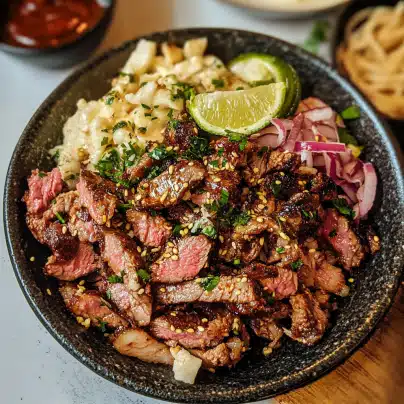
Once everything is ready, remove the pan from the heat. Serve the Korean beef over a bed of fluffy white rice and garnish with sliced green onions and a sprinkle of sesame seeds. You can also serve it with some sautéed vegetables or a side of kimchi for that authentic Korean touch.
How to Serve
Here are some ideas for serving this Korean Beef:
- Over Rice: This is the most classic way to serve Korean beef. The sticky sauce pairs perfectly with the fluffy rice, and the beef becomes even more delicious as the rice soaks up all those flavors.
- On Lettuce Wraps: For a lighter option, serve the beef in large lettuce leaves for a fun, low-carb version. Add a little rice to each wrap for balance.
- With Noodles: If you want a twist, serve the beef over noodles instead of rice. Sautéed udon noodles or even ramen work beautifully here.
- As a Side Dish: If you’re serving this Korean Beef alongside other dishes, it pairs wonderfully with kimchi, roasted vegetables, or a simple cucumber salad for some crunch.
Additional Tips
Here are five helpful tips to make sure your Korean Beef turns out perfectly:
- Slice the Beef Thinly: The thinner the beef, the quicker it cooks and the more tender it will be. Freezing the beef for 30 minutes makes it much easier to slice thinly.
- Use Fresh Ingredients: Fresh garlic and ginger really elevate the flavor of the sauce. If you use pre-minced garlic or ginger, the taste won’t be as vibrant.
- Adjust the Spice Level: Gochujang can be spicy! Start with a tablespoon and taste the sauce before adding more. You can always add more heat, but you can’t take it out once it’s in!
- Let the Sauce Thicken: For that perfect sticky glaze, don’t rush the cornstarch step. Let the sauce simmer and thicken before adding the beef back in.
- Don’t Overcook the Beef: Beef cooks quickly, especially when sliced thin. Overcooking can lead to tough meat. Cook just until it’s browned and tender.
Recipe Variations
Here are a few fun ways you can switch up this Korean Beef recipe:
- Vegetarian Option: Swap the beef for tofu or tempeh. Both options will soak up the savory sauce beautifully, and tofu adds a nice contrast to the beef’s texture.
- Gluten-Free: Use tamari instead of soy sauce to make the recipe gluten-free. Make sure your gochujang is also gluten-free, as some brands contain gluten.
- Spicy Kick: If you like things extra spicy, add a sliced fresh chili pepper to the sauce or increase the amount of gochujang. You can also serve with chili oil for an extra heat boost.
- Beef Substitutes: If you don’t have flank steak, you can use sirloin, skirt steak, or even ground beef in a pinch. Just adjust the cooking time as needed for ground beef.
- Add Veggies: Throw in some sliced bell peppers, onions, or mushrooms when cooking the beef to add extra flavor and texture to the dish.
Serving Suggestions
Here are some sides that complement this dish:
- Roasted Vegetables: Roasted carrots, broccoli, or Brussels sprouts add a lovely crunch and balance out the richness of the beef.
- Cucumber Salad: A simple cucumber salad with rice vinegar, sesame oil, and a pinch of sugar adds a refreshing contrast.
- Kimchi: Serve with traditional kimchi to add some tangy, spicy flavor to your meal.
- Rice: For a complete meal, serve this Korean Beef over a bed of white rice, jasmine rice, or even quinoa for a slightly different texture.
Freezing and Storage
- Storage: Leftover Korean Beef can be stored in an airtight container in the fridge for up to 3 days. Reheat it gently in a pan over medium heat with a splash of water or broth to keep it moist.
- Freezing: If you have leftover beef, you can freeze it for later. Allow the beef to cool completely, then transfer it to a freezer-safe container. Freeze for up to 3 months. To reheat, simply thaw in the fridge overnight and reheat in a pan or microwave.
Special Equipment
- Skillet or Wok: A large, heavy-duty skillet or wok is essential for cooking the beef evenly and quickly. A non-stick skillet works great for this recipe.
- Sharp Knife: A sharp knife will make it much easier to slice the beef thinly. If you don’t have a sharp knife, a serrated knife works well too.
- Grater: A microplane grater is perfect for grating fresh ginger for the sauce.
FAQ Section
Can I use store-bought gochujang?
Yes! Store-bought gochujang is a great shortcut. Just make sure to check the label for quality, and adjust the quantity to your desired spice level.
Can I use ground beef instead of steak?
Absolutely! Ground beef works just as well in this recipe. Just cook it until browned and crumbled, then proceed with the sauce.
Can I make this recipe ahead of time?
Yes, you can prep the beef and sauce a day ahead and store them separately in the fridge. When you’re ready to serve, simply heat everything together.
What if I don’t have sesame oil?
If you don’t have sesame oil, you can use vegetable or canola oil, though it won’t give the same nutty flavor. Add a few drops of toasted sesame oil to the finished dish to get that signature flavor.
Korean Beef
- Total Time: 30 minutes
Ingredients
Here’s everything you need to make this Korean Beef recipe:
- 1 lb flank steak or sirloin steak, thinly sliced against the grain (Tip: Freezing the steak for 30 minutes before slicing makes it easier to cut thin slices)
- 2 tablespoons sesame oil (adds that signature nutty flavor)
- 3 cloves garlic, minced (fresh garlic is key for that bold, savory taste)
- 1 tablespoon fresh ginger, grated (adds warmth and depth)
- 1/4 cup soy sauce (use low-sodium for a healthier option)
- 2 tablespoons brown sugar (for that sweet balance)
- 1 tablespoon rice vinegar (for a bit of tanginess)
- 1 tablespoon gochujang (Korean red chili paste, for heat—adjust to your spice preference)
- 1/4 cup water (to thin out the sauce)
- 1 tablespoon cornstarch (to thicken the sauce)
- 2 tablespoons sesame seeds (for garnish)
- 2 green onions, sliced (adds a burst of freshness)
- Cooked white rice, for serving
Each ingredient is important for building layers of flavor, from the sweetness of the brown sugar to the savory richness of the sesame oil. The gochujang gives it that signature Korean heat, while the sesame seeds and green onions provide a fresh, crunchy finish.
Instructions
Step 1: Prepare the Beef
Start by prepping your beef. If you haven’t done so already, freeze your steak for about 30 minutes to firm it up. This will make slicing it thinly so much easier. Using a sharp knife, slice the beef against the grain into thin strips—think about 1/4-inch thick pieces. The thinner, the better! This helps the beef cook quickly and stay tender.
Step 2: Cook the Beef
In a large skillet or wok, heat up the sesame oil over medium-high heat. Once it’s nice and hot, add the sliced beef in a single layer. Don’t overcrowd the pan; if you need to, cook the beef in batches to get a nice sear. Cook the beef for about 2-3 minutes on each side, just until it’s browned and cooked through. Remove the beef from the skillet and set it aside.
Step 3: Make the Sauce
In the same skillet, add a little more sesame oil if needed. Toss in the minced garlic and grated ginger, and sauté for about 30 seconds until fragrant. Be careful not to burn the garlic—it can get bitter quickly! Then, add the soy sauce, brown sugar, rice vinegar, gochujang, and water to the pan. Stir to combine and bring it to a simmer.
Step 4: Thicken the Sauce
Once the sauce is simmering, mix the cornstarch with a tablespoon of cold water in a small bowl to make a slurry. Add the slurry to the sauce, and stir well. Let it simmer for another 2-3 minutes until the sauce thickens and becomes glossy. You should have a thick, sticky sauce that coats the back of a spoon.
Step 5: Combine and Cook Together
Add the cooked beef back into the pan with the sauce. Toss everything together to coat the beef in the delicious sauce. Let it cook for another 2 minutes to ensure the beef is heated through and fully coated in that rich, savory sauce.
Step 6: Garnish and Serve
Once everything is ready, remove the pan from the heat. Serve the Korean beef over a bed of fluffy white rice and garnish with sliced green onions and a sprinkle of sesame seeds. You can also serve it with some sautéed vegetables or a side of kimchi for that authentic Korean touch.
- Prep Time: 10minutes
- Cook Time: 20 minutes
Nutrition
- Serving Size: 4
- Calories: 400
- Fat: 25g
- Carbohydrates: 25g
- Protein: 30g
Conclusion
This Korean Beef recipe is sure to become a favorite in your home! Whether you’re making it for a quick weeknight dinner or a special meal with friends, it’s a delicious, comforting dish that’s full of bold flavors. I hope you give it a try and make it your own with your favorite variations. Don’t forget to tag me on Instagram when you make it—I can’t wait to see how yours turns out! Happy cooking!